Pipe relining is a drain repair solution that repairs a damaged sewer pipe from the inside. The process involves installing a resin-soaked liner in the existing pipe and letting it harden in place. This forms a new pipe wall inside the old one, avoiding the need to dig up driveways, slabs, pools or gardens.
How long a pipe reline repair lasts comes down to two things: the materials that go into the pipe, and how well the pipe is prepared before relining. In this blog we will outline what we use at Drain Fixers and why.
The two parts of a relining system
Every relining system has two main parts:
- A structural liner: a flexible tube made of reinforcing fabric
- A resin: it soaks into the liner and hardens it in place
On site, the liner is soaked in resin, positioned inside the damaged section of pipe and expanded against the old pipe wall. Once the resin cures (hardens), the liner is no longer flexible. It becomes a rigid new pipe that seals cracks, holes, open joints and root entry points along its full length.
This is why relining is often called no-dig pipe relining or trenchless pipe repair. The new pipe is built inside the old one, so the old pipe doesn’t have to be dug up and removed.
The liner: felt or glass fibre
Relining liners are usually made from polyester felt or glass fibre reinforced fabric. Both are designed to soak up resin and form a structural pipe once cured. We choose the liner to suit the pipe’s size, condition and layout.
A good liner needs to:
- Expand to fit closely against the old pipe wall
- Absorb resin evenly so there are no dry or weak spots
- Keep a consistent thickness along the full length of the repair
- Stay thin, so the relined pipe keeps as much of its original internal diameter as possible
The resin: two-part epoxy
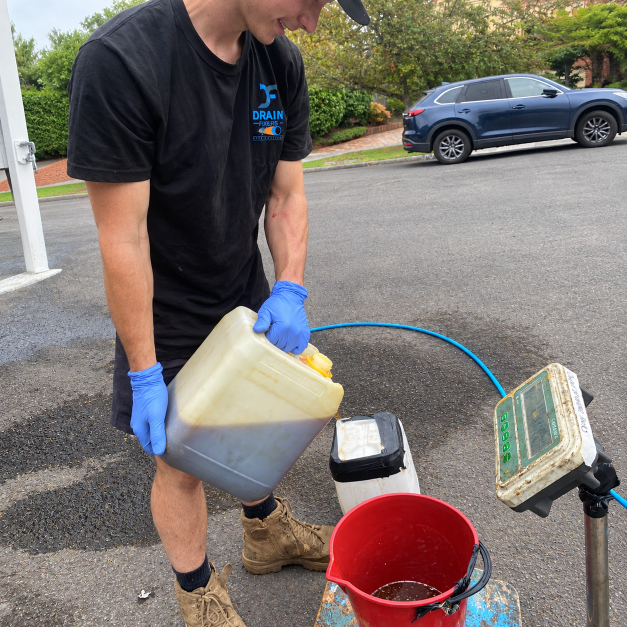
The liner is soaked in two-part epoxy resin. A resin and a hardener are mixed on site just before the liner is soaked.
We use epoxy because it:
- Bonds strongly to the liner fabric
- Cures into a hard, rigid structure
- Resists the wastewater and household chemicals normally found in a sewer
- Gives a smooth internal surface once cured
Epoxy hardens through a chemical reaction. That can happen at normal ground temperature, or heat can be used to speed up the process, depending on the pipe size, the length of the repair and the site.
What relining can fix, and what it can’t
Pipe relining is the right repair for many sewer defects, including:
- Cracked and fractured pipes
- Open or displaced joints
- Tree roots coming in through joints and cracks
- Holes and leaks
It isn’t the right repair when:
- The pipe has collapsed, so there’s no pipe left to line
- Sections of pipe are missing
- The pipe is badly misaligned
- The pipe has a significant sag (a “belly”), because the liner follows the shape of the old pipe and the sag stays
In these cases, part of the pipe may need to be dug up and replaced first, and then the rest of the pipe can be relined. That’s why every job starts with a CCTV drain inspection. We don’t recommend relining until we’ve seen inside the pipe.
Preparation matters as much as the materials
The best liner and resin will still fail if the pipe isn’t prepared properly. Our process is:
- CCTV inspection to find and measure every defect
- High-pressure jetting and root cutting to remove roots, scale and debris
- A check that the pipe is clean, with the length measured for the liner
- Installing and curing the liner
- A second CCTV inspection to check the finished repair and reopen any branch connections
Roots or debris left behind can stop the liner sitting tight against the old pipe. That leaves gaps, wrinkles or a weak bond: the weak points that cause relining to fail early.
How long does a relined pipe last?
Drain Fixers liners come with our 50-year product warranty. It covers defects in materials and workmanship and applies to the original purchaser, subject to the warranty’s conditions. It is in addition to your rights under the Australian Consumer Law.
The warranty covers the liner we install. It doesn’t cover parts of the old pipe outside the lined section, such as roots getting in beyond the ends of the liner or the old pipe settling. Your quote shows exactly which sections are being lined, so you know what’s covered.
Why reline instead of dig?
When relining suits the pipe, it has clear advantages over digging and replacing:
- Little or no excavation. We usually get in through existing access points or a small opening, not a trench along the full length of the pipe.
- No joints in the lined section. Joints are where roots and leaks usually get in.
- Smooth internal surface. The thin wall keeps the pipe’s diameter, and the smooth finish helps waste flow.
- Less disruption. Driveways, slabs, paving and landscaping stay in place, and the work is usually finished much faster.
Not sure what’s wrong with your drain?
If you have recurring blockages or tree roots, or a sewer runs under a driveway, slab or extension, start with a CCTV inspection. We’ll show you the footage, explain what’s wrong and why it matters, and tell you whether relining is the right fix.
Book a CCTV drain inspection with Drain Fixers, Melbourne’s specialist drainage rehabilitation contractor.