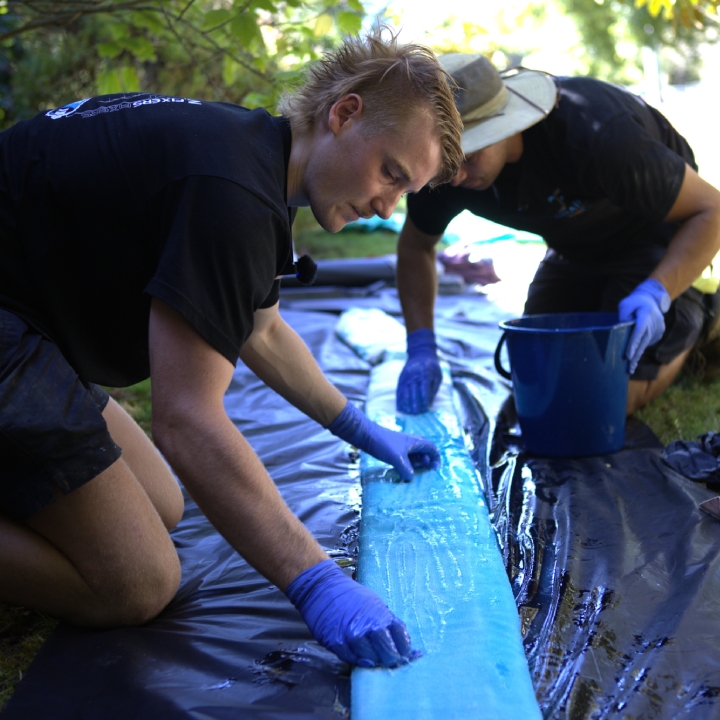
Trenchless pipe relining offers a way to repair damaged pipes from within. Rather than digging up the ground to access pipes, plumbers send their tools through an easy access point in the pipe, and carry out the repair from the inside. This means extensive excavation is generally unnecessary, and disruption to surrounding property is minimised.
Let’s look at how trenchless pipe repair works, what the advantages are, and why it’s becoming the more popular choice over older pipe repair methods.
How does trenchless pipe relining work?
If you’re experiencing pipe blockages that aren’t solved using simple pipe clearing methods, it’s possible there’s something wrong deep in your drain system. How do we find out what’s going on?
CCTV Drain Inspection
At Drain Fixers, we conduct a CCTV drain inspection as a first step. This involves pushing a small, high-definition camera attached to the end of a cable through your pipes via an easy access point. As the cable is threaded through the pipe, the footage shows us the inside of your drain. We watch its journey from our monitor, and make note of where there is pipe damage. Knowing the exact location of damage removes any guesswork, and tells us what method of pipe repair is best suited for the job.
Cleaning the pipes
If suitable for pipe relining, we prepare the pipe by washing it out with high pressure water. If there are any obstacles in the pipe, like tree roots, we may use robotic pipe cutting methods to remove them. Once the object is cleared, we proceed with lining the pipe.
The pipe relining process
To line the pipe, we insert an epoxy-resin liner into the pipe and inflate it, so that it sits flush against the pipe’s internal surface. We then wait for a period of hours while the resin cures. Once cured, the new functional pipe with a smooth internal surface and no seams, has formed within the old pipe.
Final inspection
We test the pipe to ensure it is functioning properly, before we finish the job.
Is pipe relining always the right treatment?
Whilst trenchless sewer repair can repair many damaged pipes, it isn’t always the right fix. Digging and pipe replacement may be necessary if:
- Joins in the existing pipe are badly misaligned or detached, or the pipe has already collapsed.
- There’s no downstream access available to insert the liner.
- There’s incorrect or inadequate grade/fall in the sewer pipe.
- There’s a solid obstruction inside the pipe that can’t be removed with robotic cutting.
The Old Methods of Pipe Repair
Prior to trenchless pipe repair technology becoming available, more invasive methods of repair were used. While some of these methods are still appropriate in certain situations, they can have significant drawbacks.
Digging
Excavating the ground to insert a new pipe was a standard form of pipe replacement up until recently, and in a limited number of cases, may still be needed. This method involves using heavy machinery to dig up the ground in order to access the pipe. Whilst this method allows access to the pipe, structures and gardens around the pipe may be damaged in the process. The cost of remedying the site after pipe repair may be significant. Add to that, there’s a need for more workers (higher labour costs), as well as the risk of cave-ins and damage to underground infrastructure, making the job more complex and potentially costly.
Chemical Repairs
Chemical treatments are occasionally used to seal cracks, leaks and other defects in pipes, without needing to dig up the ground. On the downside, there is a risk that chemicals used in these repairs leach into surrounding soil and groundwater, and cause environmental damage. The chemicals can also corrode or weaken older clay or metal pipes. So whilst chemical repairs can work for minor problems, pipe relining offers a safer and more long-term fix.
Spot Repair Clamps
Localised cracks and leaks can occasionally be repaired with spot repair clamps, thus avoiding pipe replacement, however the pipe might proceed to deteriorate further. Add to that, metal components, when exposed to moisture, may corrode, reducing their efficacy over time. In addition, with earth movements, the clamps can shift position, compromising the repair.
In addition, it can be hard to access the location of the crack or leak using this method, so if the repair is needed behind a wall or under a slab, some infrastructure may be damaged in order to complete the repair.
What are the advantages of trenchless sewer pipe relining?
Trenchless pipe relining offers several advantages over traditional pipe repair and replacement methods, including:
- Minimal disruption: Pipe relining offers a minimally invasive pipe repair process, so residents and workers alike can continue with day-to-day activities onsite, with little disturbance.
- Long-lasting results: A strong and long-lasting pipe is created, which can last decades. It’s not just a short-term solution.
- A seamless finish: The new pipe is seamless, so it’s no longer possible for tree roots to enter into the pipe.
- Reduced risk of blockages: The inner surface of the pipe is resistant to residue build-up, allowing for easy flow of wastewater and reducing the risk of future blockages.
- Versatility: Pipe relining can be used to replace a range of pipe materials, including PVC, cast iron, clay and concrete.
- No excavation or property damage: Because pipe relining doesn’t require digging, there’s no need for heavy excavation equipment, and gardens, landscaping, driveways, decks and other infrastructure can generally remain undisturbed.
Trenchless Pipe Relining Melbourne
Are you dealing with drain problems? If any of the following issues are impacting your property, trenchless pipe relining might be the most effective solution.
- Slow-draining pipes or recurring drain blockages
- Persistent bad smells coming from drains
- Damp patches or pooling water on your property
- Repeated drain repairs
- CCTV inspection reveals pipe damage (tree root intrusion, cracked or corroded pipes and so on).
Contact us for a free CCTV drain inspection with a $0 call-out fee. Our experienced drain repairers in Melbourne will find out what’s causing your drain problems, and offer the right solution for you.